

Seeking Help for Alcohol or Drug Use
If alcohol or drug use is affecting your health, relationships, money or ability to get through the day, you can ask for professional help without deciding in advance whether you need rehabilitation. In Aotearoa New Zealand, a GP, community alcohol and other drug (AOD) service or the Alcohol Drug Helpline can help you work out the next step. You can seek advice if you want to cut down, stop using, manage withdrawal, or simply understand your options.
A practical first step: Call the Alcohol Drug Helpline on 0800 787 797, or book an appointment with your GP. Tell them what you use, how often, what happens when you try to stop, and what you want to change.
Get urgent help instead if someone is unconscious, having a seizure, struggling to breathe or in immediate danger: call 111 and ask for an ambulance. If you are physically dependent on alcohol or benzodiazepines, do not attempt an abrupt withdrawal without medical advice; withdrawal can be dangerous.
How to recognise when professional support could help
Amount alone does not tell the whole story. Losing control of use, or continuing despite its effects, also matters. Warning signs include needing more to get the same effect, cravings, withdrawal symptoms, repeated unsuccessful attempts to cut back, or continuing despite problems at work, school or home. Some people seek support after an overdose or driving incident; others notice anxiety, poor sleep, debt or strained whānau relationships long before a crisis.

You can speak to a professional even if you are unsure whether you have an addiction. If your goals are unclear, say so. A first conversation can focus on reducing harm and making a manageable plan rather than promising immediate abstinence.
Where to start: GP, helpline or addiction service?
You can start with a GP, a helpline or an AOD service. If withdrawal or other health problems are involved, start with a clinician.
| Starting point | Useful when | What to ask for |
|---|---|---|
| GP or healthcare provider | You have withdrawal symptoms, medicines to review, sleep or mental health concerns, or other health conditions. | Discuss safety, an initial assessment, treatment options and referral to a specialist service. |
| Alcohol Drug Helpline | You want confidential advice, are unsure which service to approach, or are worried about someone else. | Ask about local services, self-referral, free counselling and what to do while waiting. |
| Community AOD service | You want structured support while continuing to live at home. | Ask whether you can contact the service directly, its eligibility rules and available appointments. |
| Specialist or residential provider | Repeated attempts have not worked, your environment makes change difficult or you need intensive care. | Ask about clinical assessment, referral requirements, programme fit and costs. |
To find nearby services, use the Healthpoint mental health and addiction directory. It can help you identify providers, but it does not mean every listed service has immediate availability. Health improvement practitioners and health coaches in some primary care settings may also help you take an initial step, particularly when substance use overlaps with stress or other wellbeing concerns.
What happens at an addiction assessment?
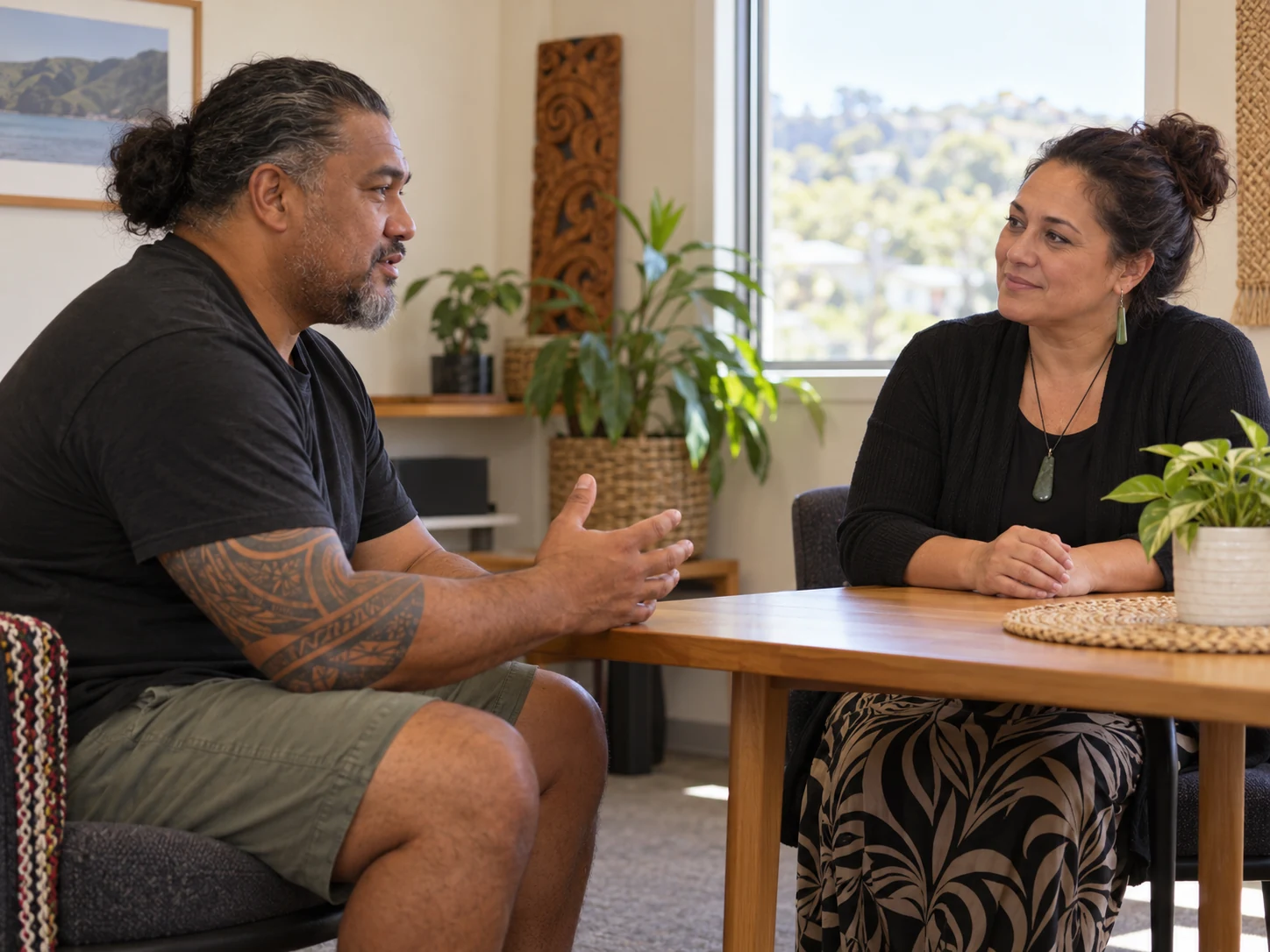
An addiction assessment helps a clinician work out what care is safe and realistic for you. An addiction practitioner, counsellor, nurse, doctor or other qualified clinician may ask about the substances involved, quantity and frequency, withdrawal history, previous treatment, current medicines, physical health, mental health and living situation. They may also ask about safety, pregnancy, housing, transport, employment, family responsibilities and the people you want involved in your care.
Tell the clinician what you actually use, even if it feels uncomfortable. The difference between an occasional drink and daily heavy drinking, for example, can change whether medical withdrawal support is needed. If you also experience depression, anxiety, trauma-related difficulties or another co-existing mental health condition, ask how both needs will be addressed rather than treated as unrelated issues.
Before agreeing to a plan, check four things: what the treatment aims to change, where it takes place, what it will cost and what support follows it. You can also ask who can access your health information, whether notes are shared with other providers, and how whānau can participate with your permission. Confidentiality has limits where safety or legal obligations apply; ask the service to explain its policy.
Choosing the right treatment option
Rehabilitation does not necessarily mean moving into a residential centre. Health New Zealand describes a range of community services and live-in services. The decision depends on medical risk, your home situation and what you want treatment to achieve.
Counselling and brief interventions
With a counsellor, you can look at what triggers use, practise ways to manage cravings and decide what change is realistic. A brief intervention may be enough for someone whose use is becoming risky but who does not require intensive treatment. For persistent difficulties, a counsellor or psychologist may use approaches such as cognitive behavioural therapy (CBT) to explore patterns between thoughts, emotions and substance use. Group sessions can add shared learning and accountability. Ask whether the programme is tailored to alcohol, cannabis, methamphetamine, opioids or multiple substances.
Medical withdrawal management and medication
Detoxification or withdrawal management addresses the physical risks and discomfort of stopping certain substances. It is not the same as long-term addiction treatment. Medical advice is particularly important for someone with a history of severe alcohol withdrawal, seizures, complex health needs or benzodiazepine dependence. Some people may be supported in the community; others require more closely supervised care.
Medication-assisted treatment may form part of a wider recovery plan. For opioid dependence, opioid substitution treatment (OST) can help stabilise health and reduce the harms of illicit opioid use under clinical supervision. Other medications may be considered for particular conditions. A prescriber should explain benefits, risks, monitoring and how medication fits with counselling or psychosocial support.
Intensive outpatient programmes and residential rehabilitation
Intensive outpatient programmes (IOPs) offer more frequent structured support without requiring you to live at a facility. They can suit people who need regular sessions but have a safe home environment and workable transport or childcare arrangements. Residential rehabilitation offers a live-in setting, often with group-based work, daily routines and sustained support. It may be more appropriate when substance use remains hard to manage in everyday surroundings or earlier community approaches have not been enough.
Residential services can involve waiting lists, shared living and a fixed programme length. Most publicly funded or non-governmental options described by Health New Zealand are free, while private clinics may charge. A support house or transitional accommodation can sometimes help before or after a live-in programme. Ask about eligibility, house rules, family contact, continuing care and what happens if you leave early. A therapeutic community model may suit some people but not everyone; programme intensity alone does not guarantee a better outcome.
Free treatment, private care and waiting lists
Health New Zealand states that addiction treatment is free through publicly funded services, although access to some services may involve a wait. Private counselling, clinics and residential programmes may have fees. Do not assume that every GP visit, assessment, accommodation arrangement or private service is free: confirm charges, funding eligibility and possible financial assistance before committing.
If you are put on a waiting list, ask what support is available now. This might include helpline contact, peer support, appointments with your GP, harm-reduction advice or a different community service. Ask who to contact if withdrawal symptoms worsen or your situation becomes unsafe. For live-in treatment, check whether support housing and help with living costs are possible through relevant services or Work and Income.
Recovery should fit your culture, identity and whānau
A treatment service also needs to work for your culture and whānau. Some people prefer a kaupapa Māori approach grounded in Te Ao Māori, relationships with whānau, and connections with hapū, iwi or marae. Whānau Ora and Māori health providers may offer ways to address broader wellbeing alongside substance-related harm. Pasifika services may incorporate family, language, spirituality and community connection. Ask directly what cultural support is available rather than assuming every programme provides the same approach.
You can request an explanation of how family or whānau will be involved and what remains your choice. For rangatahi, age-appropriate youth support matters; a service designed for adults may not be suitable. People with disabilities, LGBTQIA+ people, rural residents and those with limited transport may also need accessible formats, telehealth or a provider with relevant experience. If a service is not a good fit, ask for another referral.
What if you are not ready to stop completely?
Seeking professional help does not require certainty about lifelong abstinence. Harm reduction can be an appropriate starting point while you explore change. This may include reviewing situations that increase overdose risk, discussing safer practices, avoiding mixing substances, and using available needle exchange services if you inject drugs. The Level, an initiative associated with the New Zealand Drug Foundation, provides substance information and support options.
Tell the clinician what matters first: drinking on fewer days, staying housed, sleeping better, repairing relationships or stopping entirely. Your treatment plan should name goals you can revisit. If you experience repeated cravings or a return to use, discuss what changed and which additional supports might help. A setback can signal that the plan needs adjustment; it does not make further care pointless.
What ongoing recovery support looks like
Recovery continues after use has stopped or reduced. Continued support may help with cravings, relapse prevention, work or study, social isolation, housing and rebuilding relationships. A follow-up plan can combine counselling, a peer support worker, a health coach and regular GP reviews when appropriate. People with lived experience may offer practical encouragement that complements, rather than replaces, clinical care.
Peer groups provide another option. SMART Recovery Aotearoa focuses on practical self-management skills; Alcoholics Anonymous and Narcotics Anonymous offer mutual support through different group traditions. A familiar group name is not necessarily the best fit. Ask about meeting format, accessibility, personal preferences and whether the approach fits your goals. Whānau and friends may also benefit from their own support, including Al-Anon for people affected by another person's drinking.
Helping someone else seek professional support
If you are concerned about a partner, friend or whānau member, choose a time when they are not intoxicated and describe specific changes you have noticed without diagnosing them. Offer to help make a call, find a service or attend a GP appointment if they agree. Listen to what they want to change; pressure or repeated arguments rarely resolve the practical obstacles to treatment.
You can offer help without giving someone money or accepting unsafe behaviour. You can contact the Alcohol Drug Helpline yourself for confidential guidance even if the other person is not ready to engage. If children or anyone else are at immediate risk, prioritise safety and seek urgent assistance.
tact details with the provider before travelling.Questions people often have before getting help
Do I need a GP referral?
Not always. Helplines and some community services can be contacted directly, while certain specialist or residential programmes require an assessment or referral. Ask the service whether self-referral is accepted.
Will seeking help affect my privacy?
Health providers have confidentiality obligations, but information-sharing arrangements and exceptions vary. Before disclosing sensitive details, ask how records are stored, who may receive information and what consent is required to involve whānau.
Can I get help for addiction and mental health concerns together?
Yes, discuss both at assessment. Co-existing conditions can affect the safest treatment sequence and which clinicians should be involved. If one service cannot meet both needs, ask how referrals and care coordination will work.
What if treatment has not worked before?
Tell the practitioner which approaches you tried, what helped temporarily and what made continuing difficult. This may reveal a need for different intensity, medication review, culturally appropriate care, stronger aftercare or more support with housing and daily life.
What should I say when I make the first call?
Try: “I'm concerned about my alcohol or drug use and want to understand my options. I'm using [substance] [how often], and I'm worried about [withdrawal, health, family or another issue]. Can you help me find the right service?”
If you are unsure where to begin, call the Alcohol Drug Helpline or speak with your GP. Ask who can assess you and what support is available before your first appointment.
About this information: This page is general information, not a personal diagnosis or substitute for clinical advice. Service availability and rules can change. Confirm important details with the provider or regulator.